Trump despises the 9th Circuit Court of Appeals; why doesn’t he change it?
President Trump
regularly rails against the San Francisco-headquartered 9th Circuit
Court of Appeals, yet he has not taken an opportunity reshape the
nation’s largest and arguably most liberal appeals court. Both the
court’s supporters and detractors are wondering when he will.
There are five vacancies now on the 9th Circuit — which Trump most recently called “broken and unfair”
— and two more are coming in the next eight months. That means Trump
could significantly influence the West Coast judiciary by nominating the
type of young, ideologically conservative judges he has tapped for
other courts.
“Trump is going to have an enormous effect on the 9th Circuit,” said Erwin Chemerinsky, dean of the UC Berkeley School of Law. “Trump right now can fill about 20 percent of the seats on the court, and he still has at least three years left in his term. He could dramatically alter the composition of the court.
Chemerinsky said the stakes are “huge” in part because of the 9th Circuit’s size and large caseload. Nearly one fifth of the U.S. population lives in the nine western states spanned by the 9th Circuit, ranging from liberal California, Oregon and Washington to conservative Arizona, Idaho and Alaska.
“Trump is going to have an enormous effect on the 9th Circuit,” said Erwin Chemerinsky, dean of the UC Berkeley School of Law. “Trump right now can fill about 20 percent of the seats on the court, and he still has at least three years left in his term. He could dramatically alter the composition of the court.
Chemerinsky said the stakes are “huge” in part because of the 9th Circuit’s size and large caseload. Nearly one fifth of the U.S. population lives in the nine western states spanned by the 9th Circuit, ranging from liberal California, Oregon and Washington to conservative Arizona, Idaho and Alaska.
While the 9th Circuit has a reputation of having its decisions overturned by the U.S. Supreme Court — which happened 88 percent of the time
during the court’s 2016 term — the Supreme Court reviewed just eight of
the 9th Circuit’s 6,554 rulings that year. That means that, love them
or hate them, the vast majority of court’s decisions become the law of
the land.
So why hasn’t Trump moved faster on the 9th Circuit?
In nominating those 12 appeals court judges, the White House tended to focus on states that Trump won during the 2016 election, and also those represented by key GOP senators. Trump’s first two appeals court nominations involved Kentucky judges on the 6th Circuit, of special interest to Senate Majority Leader Mitch McConnell. Most of the remainder involve appeals courts in the Midwest and South.
The Senate “blue-slip” tradition may be another factor. The “blue slip” refers to a gentleman’s agreement, not a hard rule, that allows a U.S. senator to reject judicial nominees for their home state by refusing to return a positive blue slip to the Senate Judiciary Committee chairman.
If this tradition is honored, Sen. Dianne Feinstein and other west-coast Democrats will have leverage over Trump nominations in their states. But conservative groups are pressuring Senate Judiciary Chairman Charles Grassley to abandon that tradition, and Grassley has indicated he may not honor blue-slip objections in all situations.
A test case is coming up. Last year, Trump nominated a 44-year-old federal prosecutor from Oregon, Ryan Bounds, to an open seat on the 9th Circuit. Like many of Trump’s judicial nominees, Bounds is a member of the Federalist Society, a conservative group that Trump once stated would be the selector of all of his judicial nominees.
Oregon’s two U.S. senators, both Democrats, objected to Bounds’ nomination, stalling the confirmation. This month, Trump renominated Bounds to the seat, and Grassley is declining to say if his confirmation process will advance. “Sen. Grassley has not made any statements on this particular nominee,” said Taylor Foy, a spokesman for the judiciary chairman.
Feinstein insists that Grassley consult with Oregon’s senators. “If a nominee doesn’t receive [favorable] blue slips from both home-state senators, the committee shouldn’t move forward,” Feinstein said in a statement to McClatchy.
For its part, the White House declined to comment on its approach to the 9th Circuit, saying only that “we are working with and extensively consult all Senators, from both parties, throughout the nomination process.”
If Grassley abandons the blue-slip process, it would eliminate the incentive for Trump to consult with Democrats and could change the 9th Circuit for decades to come, said Barry McDonald, a law professor at Pepperdine University in California.
“He and his advisers have stated they are looking to appoint young, ideologically conservative judges, so they will be on the bench for a number of years,” said McDonald. “The more judges he’s able to appoint, the more of the mark they are going to leave on the law.”
Yet McDonald, who once clerked for Supreme Court Chief Justice William Rehnquist, said abandonment of bipartisan consultation will only add to partisan divides in the judicial system, resulting in more judges on the political fringes. “The blue slip plays a moderating role.”
Eliminating the blue slip process would also inflame already tense relations between Feinstein and Grassley, and Feinstein and Trump.
Through much of last year, the White House was cautious in dealing with Feinstein, who is both a ranking member of Judiciary and a member of the Senate Intelligence Committee, giving her sway over the Senate’s Russia investigations. But Trump recently referred to Feinstein as “Sneaky Diane” in a tweet, after she used her Judicial Committee seniority to release testimony from the founder of the firm behind the infamous Trump dossier.
Controversy over blue slips flares in nearly every administration, depending on who is in power. When Obama was president, Judiciary Chairman Patrick Leahy, a Democrat from Vermont, honored the blue slip tradition, and Republicans used it to block many of Obama’s nominees, including those to the 9th Circuit. That obstruction prompted a 2014 New York Times editorial urging Leahy to abandon the blue slip.
With Trump in power, conservative groups are running ads denouncing Democrats who use their blue slips to block the president’s nominees.
Over the last two months, Feinstein and Grassley have engaged in dueling op-eds over the issue. Grassley argues that defenders of the blue-slip tradition overstate how consistently it has been honored in the Senate over the decades. Feinstein notes that Grassley used the blue slip to block nine of Obama’s nominees in 2015 and 2016.
Partly because of its regional location, the 9th Circuit has decided important cases over the years involving the environment, same-sex marriage and civil rights. Despite its liberal reputation — Rush Limbaugh once called it “the 9th Circus“ — most experts say the appeals court has moderated in recent years, in part because of the retirement of Jimmy Carter and Bill Clinton appointees.
Still, the 9th Circuit and its three-judge panels have struck down two of Trump’s travel bans, and also blocked a Trump order to withhold funding from so-called sanctuary cities. That April ruling prompted former White House Chief of Staff Reince Priebus to tell reporters, “It’s the 9th Circuit going bananas.”
The full 9th Circuit is authorized to have 29 judgeships. When Trump came to office, there were four openings, which became five in December when Alex Kosinski, a libertarian who regularly sided with the liberal majority, announced his retirement amid allegations of inappropriate sexual behavior.
Of the 24 judges now sitting, 18 were appointed by Democrats, and six were appointed by George W. Bush, a Republican. If Trump is able to get all of appointees confirmed this year, that split will shrink to 17-12. Conceivably, Republican appointees could exceed Democratic appointees by the time Trump leaves office.
Since the 9th Circuit operates with randomly assigned, three-judge panels, Trump’s nominees could issue much different rulings than the ones that now dog him, said Kevin R. Johnson, an immigration expert and dean of the UC Davis School of Law. “With more conservatives in the pool, you are more likely to have more conservatives on the panels,” he said.
Johnson said he expects the White House to appoint some “highly qualified people” but ones with a far more right-leaning ideology than many of their 9th Circuit predecessors.
“Trump will move the court to the right,” Johnson said. “Possibly quite a way.”
So why hasn’t Trump moved faster on the 9th Circuit?
Trump is going to have an enormous effect on the 9th Circuit
Erwin Chemerinsky, dean of the UC Berkeley School of Law
One reason is his
judicial attentions have been poised elsewhere. The White House and
Senate moved quickly last year to confirm Trump’s Supreme Court nominee,
Neil Gorsuch. The Senate then confirmed 12 of Trump’s nominees to U.S.
appeals courts by the end of 2017, a record for a president’s first year in office. By contrast, President Obama was only able to get three appeals court judges confirmed during his inaugural year.Erwin Chemerinsky, dean of the UC Berkeley School of Law
In nominating those 12 appeals court judges, the White House tended to focus on states that Trump won during the 2016 election, and also those represented by key GOP senators. Trump’s first two appeals court nominations involved Kentucky judges on the 6th Circuit, of special interest to Senate Majority Leader Mitch McConnell. Most of the remainder involve appeals courts in the Midwest and South.
The Senate “blue-slip” tradition may be another factor. The “blue slip” refers to a gentleman’s agreement, not a hard rule, that allows a U.S. senator to reject judicial nominees for their home state by refusing to return a positive blue slip to the Senate Judiciary Committee chairman.
If this tradition is honored, Sen. Dianne Feinstein and other west-coast Democrats will have leverage over Trump nominations in their states. But conservative groups are pressuring Senate Judiciary Chairman Charles Grassley to abandon that tradition, and Grassley has indicated he may not honor blue-slip objections in all situations.
A test case is coming up. Last year, Trump nominated a 44-year-old federal prosecutor from Oregon, Ryan Bounds, to an open seat on the 9th Circuit. Like many of Trump’s judicial nominees, Bounds is a member of the Federalist Society, a conservative group that Trump once stated would be the selector of all of his judicial nominees.
Oregon’s two U.S. senators, both Democrats, objected to Bounds’ nomination, stalling the confirmation. This month, Trump renominated Bounds to the seat, and Grassley is declining to say if his confirmation process will advance. “Sen. Grassley has not made any statements on this particular nominee,” said Taylor Foy, a spokesman for the judiciary chairman.
Feinstein insists that Grassley consult with Oregon’s senators. “If a nominee doesn’t receive [favorable] blue slips from both home-state senators, the committee shouldn’t move forward,” Feinstein said in a statement to McClatchy.
For its part, the White House declined to comment on its approach to the 9th Circuit, saying only that “we are working with and extensively consult all Senators, from both parties, throughout the nomination process.”
If Grassley abandons the blue-slip process, it would eliminate the incentive for Trump to consult with Democrats and could change the 9th Circuit for decades to come, said Barry McDonald, a law professor at Pepperdine University in California.
“He and his advisers have stated they are looking to appoint young, ideologically conservative judges, so they will be on the bench for a number of years,” said McDonald. “The more judges he’s able to appoint, the more of the mark they are going to leave on the law.”
Yet McDonald, who once clerked for Supreme Court Chief Justice William Rehnquist, said abandonment of bipartisan consultation will only add to partisan divides in the judicial system, resulting in more judges on the political fringes. “The blue slip plays a moderating role.”
Eliminating the blue slip process would also inflame already tense relations between Feinstein and Grassley, and Feinstein and Trump.
Through much of last year, the White House was cautious in dealing with Feinstein, who is both a ranking member of Judiciary and a member of the Senate Intelligence Committee, giving her sway over the Senate’s Russia investigations. But Trump recently referred to Feinstein as “Sneaky Diane” in a tweet, after she used her Judicial Committee seniority to release testimony from the founder of the firm behind the infamous Trump dossier.
Controversy over blue slips flares in nearly every administration, depending on who is in power. When Obama was president, Judiciary Chairman Patrick Leahy, a Democrat from Vermont, honored the blue slip tradition, and Republicans used it to block many of Obama’s nominees, including those to the 9th Circuit. That obstruction prompted a 2014 New York Times editorial urging Leahy to abandon the blue slip.
With Trump in power, conservative groups are running ads denouncing Democrats who use their blue slips to block the president’s nominees.
Over the last two months, Feinstein and Grassley have engaged in dueling op-eds over the issue. Grassley argues that defenders of the blue-slip tradition overstate how consistently it has been honored in the Senate over the decades. Feinstein notes that Grassley used the blue slip to block nine of Obama’s nominees in 2015 and 2016.
Partly because of its regional location, the 9th Circuit has decided important cases over the years involving the environment, same-sex marriage and civil rights. Despite its liberal reputation — Rush Limbaugh once called it “the 9th Circus“ — most experts say the appeals court has moderated in recent years, in part because of the retirement of Jimmy Carter and Bill Clinton appointees.
Still, the 9th Circuit and its three-judge panels have struck down two of Trump’s travel bans, and also blocked a Trump order to withhold funding from so-called sanctuary cities. That April ruling prompted former White House Chief of Staff Reince Priebus to tell reporters, “It’s the 9th Circuit going bananas.”
The full 9th Circuit is authorized to have 29 judgeships. When Trump came to office, there were four openings, which became five in December when Alex Kosinski, a libertarian who regularly sided with the liberal majority, announced his retirement amid allegations of inappropriate sexual behavior.
Of the 24 judges now sitting, 18 were appointed by Democrats, and six were appointed by George W. Bush, a Republican. If Trump is able to get all of appointees confirmed this year, that split will shrink to 17-12. Conceivably, Republican appointees could exceed Democratic appointees by the time Trump leaves office.
Since the 9th Circuit operates with randomly assigned, three-judge panels, Trump’s nominees could issue much different rulings than the ones that now dog him, said Kevin R. Johnson, an immigration expert and dean of the UC Davis School of Law. “With more conservatives in the pool, you are more likely to have more conservatives on the panels,” he said.
Johnson said he expects the White House to appoint some “highly qualified people” but ones with a far more right-leaning ideology than many of their 9th Circuit predecessors.
“Trump will move the court to the right,” Johnson said. “Possibly quite a way.”
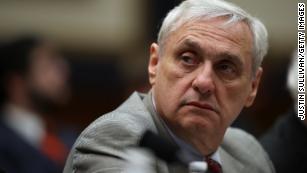
Judge
Alex Kozinski testifies on Capitol Hill in Washington, Thursday, March
16, 2017, at a House Justice Subcommittee on Courts, Intellectual
Property and the Internet hearing on restructuring the Ninth Circuit
Court of Appeals. Kozinski recently announced his retirement from the
Ninth Circuit, amid sexual harassment allegations, creating a fifth
opening on the court and an opportunity for President Trump to reshape
the court.
Susan Walsh
AP

SAN FRANCISCO — A federal appeals court has assigned a committee to
investigate workplace conditions after of sexual misconduct accusations
that forced a high-profile judge to retire.
Chief Judge Sidney R. Thomas of the 9th U.S. Circuit Court of Appeals named four judges and an employment lawyer to the committee, which will review policies to protect workers and recommend changes if necessary.
Thomas said he created the committee Dec. 17. The day before, 9th Circuit Judge Alex Kozinski announced his retirement after former clerks, externs and others in the legal profession accused Kozinski of sexual misconduct.
Thomas did not mention Kozinski by name in announcing the committee, but noted there were rules in place to deal with complaints against federal judges.
“We do have many effective procedures in place to avoid problems in the workplace,” he said in a news release. “But we need to re-examine them, develop better means of communication, and assure our law clerks and staff of a healthy and productive workplace.”
(EDITORS: BEGIN OPTIONAL TRIM)
Ninth Circuit Judge M. Margaret McKeown will head the committee. The other members named Friday were district Judges Virginia A. Phillips of Los Angeles, Charles R. Breyer of San Francisco and Candy W. Dale of Idaho, and San Diego attorney Abby Silverman, an expert in employment law.
(END OPTIONAL TRIM)
The women who complained about Kozinski included one of his former law clerks, who said confidentiality rules in the judges’ chambers made it impossible for her and other law clerks to seek redress.
The women accused him of a variety of improprieties, including showing them pornographic images and groping, in blog posts and to the Washington Post.
more here: http://www.modbee.com/news/politics-government/article194489364.html#storylink=cpy

Federal court in California to study workplace conditions after judge is accused of sexual misconduct
Saturday January 13, 2018 12:47 PM
Chief Judge Sidney R. Thomas of the 9th U.S. Circuit Court of Appeals named four judges and an employment lawyer to the committee, which will review policies to protect workers and recommend changes if necessary.
Thomas said he created the committee Dec. 17. The day before, 9th Circuit Judge Alex Kozinski announced his retirement after former clerks, externs and others in the legal profession accused Kozinski of sexual misconduct.
Thomas did not mention Kozinski by name in announcing the committee, but noted there were rules in place to deal with complaints against federal judges.
“We do have many effective procedures in place to avoid problems in the workplace,” he said in a news release. “But we need to re-examine them, develop better means of communication, and assure our law clerks and staff of a healthy and productive workplace.”
(EDITORS: BEGIN OPTIONAL TRIM)
Ninth Circuit Judge M. Margaret McKeown will head the committee. The other members named Friday were district Judges Virginia A. Phillips of Los Angeles, Charles R. Breyer of San Francisco and Candy W. Dale of Idaho, and San Diego attorney Abby Silverman, an expert in employment law.
(END OPTIONAL TRIM)
The women who complained about Kozinski included one of his former law clerks, who said confidentiality rules in the judges’ chambers made it impossible for her and other law clerks to seek redress.
The women accused him of a variety of improprieties, including showing them pornographic images and groping, in blog posts and to the Washington Post.
more here: http://www.modbee.com/news/politics-government/article194489364.html#storylink=cpy
CNN Investigation: Sexual misconduct by judges kept under wraps
Updated 12:35 PM ET, Fri January 26, 2018
(CNN)One
morning in 1998, US District Court Judge Walter Smith called a deputy
clerk into his chambers in the Waco, Texas, courthouse and closed the
door behind her.
"He
basically came over to me and put his arms around me and kissed me, and
I just froze. I couldn't move," the woman said in a deposition. "And he
said, 'Let me make love to you.' And I just freaked out. ... And then
he pulled me to him again, and he kissed me again and stuck his tongue
down my throat, and he pressed himself against me. ... And then he
started to try touch my breasts, and I kind of pushed away and said ...
'I need to go.'"
The next day, Smith sent her a dozen yellow roses.
In
recent months, powerful men in Hollywood, the media, Congress and other
spheres have been accused of sexual harassment. A common theme has been
men abusing their positions in settings where women feel they have no
recourse.
The abuse women have
suffered in the nation's courthouses has been a largely untold story.
And its system for complaints -- where judges police fellow judges -- is
a world so closely controlled and cloaked in secrecy that it defies
public scrutiny.
Rarely
do sexual misconduct allegations against federal judges become public,
even belatedly, as in the Waco episode or as they did in late 2017, with
myriad complaints against California-based US Appeals Court Judge Alex
Kozinski that drew national attention in the current #MeToo moment, forcing his resignation.

The
federal judiciary occupies a distinct place in American life that makes
what happens there potentially more striking than in other spheres. The
nearly 900 federal judges who sit on trial and appellate courts are
appointed for life. They have the authority to interpret the law on
sex-based offenses. Their attitudes about harassment could reverberate
in legal disputes that arise in other realms.
But the judiciary itself is hiding the depth of the problem of misconduct by judges.
CNN
compiled and reviewed nearly 5,000 judicial orders related to
misconduct complaints and available online over the past 10 years. The
documents, covering an array of misbehavior beyond sexual misconduct,
are remarkably short on details.
The CNN analysis found that:
- Very few cases against judges are deeply investigated, and very few judges are disciplined in any way. In many years, not a single judge is sanctioned.
- None of the actual complaints (more than 1,000 are filed annually) are made public. In the public judicial orders, claims are sparingly summarized, and accused judges' names rarely appear. Some orders refer to "corrective action" by a judge without saying what happened.
- Judicial orders are dumped onto circuit court websites as a series of numbered files with no indication of the allegations, person complaining or outcome. The practice makes it even more difficult to identify the most serious misconduct cases hidden among the opaque lists of documents because each order must be opened and individually read to gain even minimal information about the nature of the complaint.
In
the 12-month period that ended September 30, 2016, there were 1,303
complaints filed. Of those, only four were referred to a special
committee for the most serious level of investigation, according to the
Administrative Office of the US Courts. In 2015, of the 1,214
complaints, four went to a special committee.
Going
back to 2006, fewer than 10 cases annually were deeply investigated and
even fewer resulted in disciplinary action. In six of the past 11
years, not a single judge was reprimanded, suspended or otherwise
sanctioned for misconduct.
In some cases, judges simply retire -- and receive their full pension.
After
Smith cornered the clerk in Waco, she told supervisors and word
eventually made it to a regional boss who was, in the woman's telling,
upset about the incident and wanted to stop her from outright quitting.
That supervisor reached out to District Court Chief Judge Harry Lee
Hudspeth. According to the woman, Hudspeth called her and said, "What do
you want me to do about it? What exactly do you want me to do about
this?"
Hudspeth told CNN he did
not believe his reaction had been so "harsh" but would have told the
woman he had no responsibility in the matter. Smith declined to comment.
The woman left her job soon after the incident.
Sixteen
years later, the case resurfaced when a lawyer who clashed with Smith
in a separate matter unrelated to sexual misconduct was tipped off by a
court employee about the 1998 episode. After he filed a complaint
against Smith, a judicial council investigated the woman's story. It
verified the harassment, ordered "sensitivity training" and temporarily
blocked new cases from being assigned to Smith. The lawyer was not
satisfied with either the scope of the investigation or the penalty, so
he appealed and a second investigation was launched. Smith retired
before it finished and eluded further discipline.
Overall,
the data compiled by CNN and separately collected from court officials
could suggest that if people have valid complaints about judges, they
are not using the system or not getting through it.
"It's
very difficult for someone from outside to know what's happening, and
it's not always easy for insiders to know what was happening," US Court
of Appeals Judge Theodore McKee of the Philadelphia-based 3rd Circuit
told CNN. "The public does have an interest in knowing when there are
complaints that are meritorious."
After Kozinski's resignation in December from the 9th Circuit, Supreme Court Chief Justice John Roberts announced a new panel to examine the problem in the courts.
"Events in recent months have illuminated the depth of the problem of sexual harassment in the workplace," Roberts wrote, "and events in the past few weeks have made clear that the judicial branch is not immune."
The
head of the Judicial Conference's Committee on Judicial Conduct and
Disability, US Appeals Court Judge Anthony Scirica, declined repeated
requests for an interview. James Duff, director of the Administrative
Office of the US Courts, also declined.
CNN
sent a written request to Roberts asking if he would address questions
about the overall system for resolving complaints and whether he had
been aware of problems before the Kozinski matter became public. Roberts
declined the request.
'Worshipful silence'
The
federal judiciary is an independent branch of government, and judges
have long asserted that they can keep their own house in order. Judges
have vigorously fought efforts from Congress to install an inspector
general to oversee potential judicial wrongdoing, based on the
constitutional separation of powers and the view that they can root out
wrongdoers on their own.
Courthouses
are unique ecosystems that can add to the potential for secrecy and
unaddressed misconduct. In their insular world, law clerks and staff may
be intimidated by a judge or otherwise worried about harming their
careers by speaking out.
"The relationships between law clerks and their judges are mostly built on worshipful silence," Dahlia Lithwick, a former 9th Circuit law clerk, wrote in Slate. "There is no other work relationship left in America that is comparable. Which is, as it happens, part of the problem."
Lithwick
was referring to law clerks who generally serve for one year and tend
to be among the highly educated elite of a courthouse. But the buildings
are filled with far more employees of lower rank, such as the deputy
court clerk in Waco, who might be even less willing to speak up about
harassment.
A
judge can be forcibly removed from office only through impeachment and
conviction. But that process, which is controlled by the House and
Senate and is the same one used for removing a president, has occurred
only three times in the last 30 years, for issues related to bribery and perjury.
A committee led by Supreme Court Justice Stephen Breyer in 2006 noted the potential dangers of a system in which judges are judging judges.
"A
system that relies for investigation solely upon judges themselves
risks a kind of undue 'guild favoritism' through inappropriate sympathy
with the judge's point of view or de-emphasis of the misconduct
problem," the committee wrote.
University of Denver law
professor Nancy Leong, who teaches constitutional law and has focused on
how sex discrimination claims are handled, also cites the insularity as
a problem. She said some judges might balk at taking action against a
colleague knowing that they would be hearing cases together in the
future. "It's all a little bit too close-knit," she said.
"The judiciary is most responsive, and perhaps only responsive, when there's some kind of media attention," Leong said.
Administrative
officials of the US judiciary minimize the importance of a publicly
accessible, easily deciphered disciplinary system. They say the
complaints are overwhelmingly frivolous, the product of litigants
unhappy with a case decision rather than an individual judge's behavior.
Judiciary officials who spoke to
CNN only on condition of anonymity say that when a real offense arises,
the confidential process encourages judges to resign quietly, or
perhaps seek alcoholism treatment or counseling, rather than to escalate
the situation.
The Breyer
committee found that complaints were not handled properly "about 2% to
3%" of the time. But for the 17 cases the committee deemed "high
visibility," those receiving public attention, it found that close to
30% were mishandled -- a rate, the committee said, that is "far too
high." The main problem detected, in high-visibility and other
complaints, was chief judges' failure to conduct "adequate" inquires
before dismissing a complaint or to submit "clear factual discrepancies"
to investigators to pursue.
That
two-year study was requested in 2004 by then-Chief Justice William
Rehnquist, who was trying to head off congressional intervention in
judicial discipline.
Now, more
than a decade later, Roberts has established a working group to examine
the judiciary's procedures for protecting court employees from
misconduct. It is supposed to report back to the chief justice in May.
Breyer declined a request for an interview about the state of the disciplinary system since the 2006 report.
Sen.
Mazie Hirono, concerned about the potential for sexual abuse among
judges, has begun asking judicial nominees, who are subject to the
Senate confirmation process, whether they ever made unwanted requests
for sexual favors or committed verbal or physical harassment. The Hawaii
Democrat is also asking whether they faced discipline or entered into a
settlement related to such conduct.
"I
was really afraid that this would be swept under the rug," Hirono told
CNN, referring to sexual harassment concerns. "It shows that we are
serious about asking these questions, particularly for nominees for
lifetime appointments."
What's public -- and what's not
The
complaint process dates to the Judicial Conduct and Disability Act of
1980. "A central purpose of the 1980 Act is to provide transparency,"
Judge Scirica, chairman of the Judicial Conference's conduct committee,
wrote in a 2015 law review article, "so every order resolving a
complaint must be made public, and reprimands may be made public as
well."
But making information public and making it meaningful are not the same.
Many
of the documents are provided to the public as non-searchable, scanned
documents -- meaning that they cannot be searched for names, keywords or
any content at all that a public citizen may seek to find. It is
difficult to detect patterns among judges in various circuits or how
they compare to other circuits.
CNN used software designed to recognize the text images and converted the documents to searchable versions for analysis.
It
is exceedingly rare that judicial officials discipline a judge who was
the subject of a complaint, according to the CNN review. Many of the
instances that involved reported sexual misconduct had come to light
from earlier media reports or another outside party.
The
federal judiciary's general statistics that are made public reinforce
that view of scant remedial action. In its public reports going back to
2006, in fact, no censures, reprimands, suspensions or other "remedial
action" occurred in most years (2015, 2014, 2013, 2012, 2010, 2006). In
the rest, there were no more than three instances of suspension,
reprimand or other remedial action in any given year.
The judiciary's rules dramatically restrict when the name of the judge can be made public.
University
of Pittsburgh law professor Arthur Hellman, who has long studied the
third branch, said it is difficult to assess whether the judiciary has a
sexual harassment problem. "Not from anything that's public," he said.
"How can you know what isn't there?"
What happens to complaints
The
process begins when a complaint is filed in one of the 13 federal
circuit courts. Circuit chief judges dismiss the overwhelming majority
out of hand because they target a court ruling, rather than a judge's
conduct.
Of the rest, the most
common complaint is personal bias against a litigant or attorney (320
complaints in 2016). Other major categories cover conflicts of interest
(144 complaints in 2016) or racial, religious or ethnic bias (128
complaints in 2016), according to figures provided by the courts'
administrative office.
The
courts do not separate out complaints that relate to a judge's conduct
toward an employee. They may be included in a catch-all category for
"other misconduct," for which 354 complaints were filed in 2016.
If
the facts of a complaint are "reasonably in dispute" after an initial
inquiry, the chief judge is required to send the complaint to a special
committee to investigate. That action is rarely taken. Of the nearly
5,000 complaints filed between the 2006 and 2016 fiscal years, 33 went
to a special committee, CNN found.
In those situations when a complaint was investigated deeply, a party may appeal to the Judicial Conference Conduct Committee. Since 1993, that committee has issued reports in only 15 cases.
CNN
found that in several high-profile cases, judges simply resigned while a
complaint was pending. The judiciary's published statistics do not
specifically tally such situations, although they do note when a
complaint was ended because of an "intervening event," which could cover
a resignation. "Intervening events" occurred 16 times in 2016.
In glare of media spotlight
Much
of the known judicial action related to sexual misconduct was taken
because of forces outside the established system, such as media coverage
or complainants using other law enforcement channels.
In
Denver, the 10th Circuit judicial council followed local media when it
began looking into alleged misconduct involving prostitutes by District
Court Judge Edward Nottingham. According to the judicial council's
October 2008 order, the council was following up on numerous
allegations, including whether Nottingham "spent more than $3,000 at a
topless nightclub in one evening [and] that he could not remember how he
had spent that money because he had a lot to drink."
As
an investigation was underway, another misconduct complaint came in
from a woman who said she had been a prostitute and that Nottingham had
been one of her clients.
The woman, according to the judicial council report,
further alleged that "Nottingham asked her to lie to federal
investigators about the nature of their relationship and not disclose
that she was a prostitute whom he paid in exchange for sex."
As
the investigation was being completed, Nottingham resigned. The 10th
Circuit judicial council, which repeated the salacious allegations in
its report, dismissed the complaint the next day but said his
resignation was "in the interest of justice and the judiciary."
Nottingham did not respond to multiple CNN requests to his law office for comment.
Kozinski was twice brought into the spotlight by the press. The Los Angeles Times in 2008 reported
that as he was presiding over an obscenity trial in Los Angeles,
Kozinski was maintaining "a publicly accessible website featuring
sexually explicit photos and videos."
After he publicly apologized and took the server offline, a judicial council admonished Kozinski
but concluded that he deserved no further discipline. According to the
judges' June 2009 report in the matter, Kozinski "testified that he does
not visit and has no interest in pornographic websites" and that he
"certainly did not send" sexually explicit files to anyone.
Despite what some former clerks declared was an "open secret" of continuing misbehavior by Kozinski, it was not until a Washington Post story in December 2017
that a new investigation of the Pasadena-based judge was triggered.
That story highlighted an account from a woman who said Kozinski asked
her to look at pornographic images on his office computer. Several other
women subsequently came forward with allegations about misconduct.
Kozinski
resigned shortly thereafter, saying that he "may not have been mindful
enough of the special challenges and pressures that women face in the
workplace."
Nottingham, Kozinski
or any other life-tenured judge who resigns in the middle of a complaint
and is of retirement age is entitled to full pension of roughly
$200,000 annually (the amount differs for district court and appeals
court judges based on their annual salary).
Leave the bench, and all investigations stop
Disciplinary
proceedings are typically halted once the subject of a complaint leaves
the bench. That means that the source of potential bad behavior would
no longer be hearing cases or overseeing employees. But it also means
that the extent of any misconduct -- and whether other people may have
been involved -- goes uncovered by the judiciary. Prosecutors may follow
up, or civil lawsuits against a judge could be filed. Conversely,
without any further action, nothing would prevent the subject of a
complaint from moving on to another job in the law.
Even when cases are resolved, judges are not always willing to release reports of what they found.
In
2013, the judicial council of the 9th Circuit -- headed by then-Chief
Judge Kozinski -- pursued the case of Montana US District Court Judge
Richard Cebull, who had forwarded a racist joke about President Barack
Obama to six acquaintances, according to a story in the Great Falls
Tribune and, later, according to US judicial authorities.
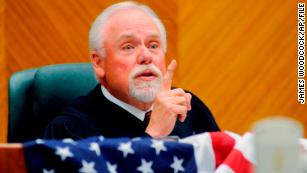
Chief Judge Richard Cebull makes a speech at the federal courthouse in Billings, Montana, on June 23, 2011.
The
Cebull email said in part, "A little boy said to his mother, Mommy, how
come I'm black and you're white? His mother replied, 'Don't even go
there Barack! From what I can remember about that party, you're lucky
you don't bark!'"
The judicial
panel found that the email and numerous others discovered constituted
misconduct. A later judicial order characterized some emails as
concerning "women and/or sexual topics and were disparaging of women."
Some jokes related to sexual orientation and religion.
As
it finished its report, the 9th Circuit council said no new cases
should be assigned to Cebull for six months and that he should be
trained on judicial ethics and racial awareness. Amid a public uproar
that followed the initial reports of the racist email, Cebull sent Obama
a letter of apology. He resigned soon after the judicial council had
resolved his case but before its report had been made public.
Once
Cebull resigned, in 2013, the council said disciplinary procedures no
longer applied and declined to issue its full report.
US
Court of Appeals Judge McKee of the 3rd Circuit petitioned the Judicial
Conference's Conduct Committee, arguing that the 9th Circuit was
concealing the extent of Cebull's misbehavior and that the full report
should be made public. The committee agreed, and the report is now online.
When outsiders accelerate the process
It has, at times, also taken external legal pressure to fight an outcome seen as too lenient or to jump-start a dormant case.
Perhaps
one of the most serious examples came in Galveston, Texas, after Judge
Samuel Kent repeatedly attacked a woman in his chambers, including
trying to force her to perform oral sex. When the woman filed a formal
complaint in 2007 after years of abuse, a 5th Circuit judicial council
reprimanded Kent, suspended his cases for four months and transferred
him to a courthouse in Houston. The council's 2007 public order did not
reveal the findings by the special investigative committee.
After
that woman and another female courthouse employee told federal law
enforcement authorities of Kent's sexual attacks, Kent in 2008 was
charged with sexual abuse counts and obstruction of justice.
Just before the scheduled trial, Kent pleaded guilty to obstruction of justice and received three years in prison.
And how did the case against Judge Smith in Waco begin and end?
The disciplinary complaint started with a disgruntled Texas lawyer.
More
than a decade after the deputy court clerk told supervisors about the
encounter with Smith, lawyer Ty Clevenger tried to bring it to light
after being fined $25,000 by Smith in a separate case.
Clevenger,
who said he heard from a courthouse employee about the 1998 incident in
Smith's chambers, acknowledged to CNN his grievances with Smith and
other judges against whom he has lodged complaints.
"I'm
not going to claim that I'm unbiased," Clevenger said, adding that many
lawyers would not dare challenge a judge for fear of some retaliation.
"I had nothing to lose," he said.
After
receiving Clevenger's complaint in 2014, which included a deposition
from the woman involved, a 5th Circuit judicial council confirmed the
harassment.
"Judge
Smith made inappropriate and unwanted physical and non-physical sexual
advances toward a court employee," the council wrote in December 2015,
adding that, "Judge Smith does not understand the gravity of such
inappropriate behavior."
Smith
had tried to get the complaint dismissed, saying the claim was too old
to be fully investigated, and questioned Clevenger's motives in bringing
it. Rejecting Smith's defenses, the judicial council suspended him from
hearing cases for one year and ordered him to attend "sensitivity
training about appropriate professional interaction." Clevenger said he
thought Smith deserved stronger punishment and appealed to the Judicial
Conference conduct committee.
That
top committee ordered the case reopened, noting that there were names of
people who had allegedly witnessed Smith sexually harassing other
women.
The second investigation was
never fully concluded when Smith retired in September 2016, at age 75.
Through his lawyer, Greg White, he declined a CNN request for comment.
Clevenger had also filed a complaint against Hudspeth,
saying he failed to fulfill his responsibilities by not referring the
deputy clerk's complaint to authorities. Hudspeth told CNN he believed
it was the woman's responsibility to file a formal complaint. Fifth
Circuit judicial officials said in 2016 that they were waiting to pursue
that complaint against Hudspeth until after the situation with Smith
was resolved.
But once Smith resigned, Hudspeth, too, had retired at age 80, so the complaint against him was dismissed.
No further inquiry was made.


